What is Strength Training?
The Basics, the Myths, and How to Get Started
Defining Strength Training
Let’s start with a working definition of what constitutes strength training. Strength training, also called resistance training, is training that makes your muscles work against an external force, whether that is your own bodyweight, free weights, machines, resistance bands, or cables, in order to build muscular strength. The training effect comes from progressive overload: gradually increasing the resistance over time so that muscles, tendons, and bones are forced to adapt. Public health guidelines generally recommend strength training at least twice a week, working through fundamental movement patterns like squatting, hinging, pushing, pulling, and carrying.
I think this is a good high level definition to start from, and keep in mind there is nuance to all of this since each individual’s capabilities are different and we all start from different places relative to our maximum strength potential.
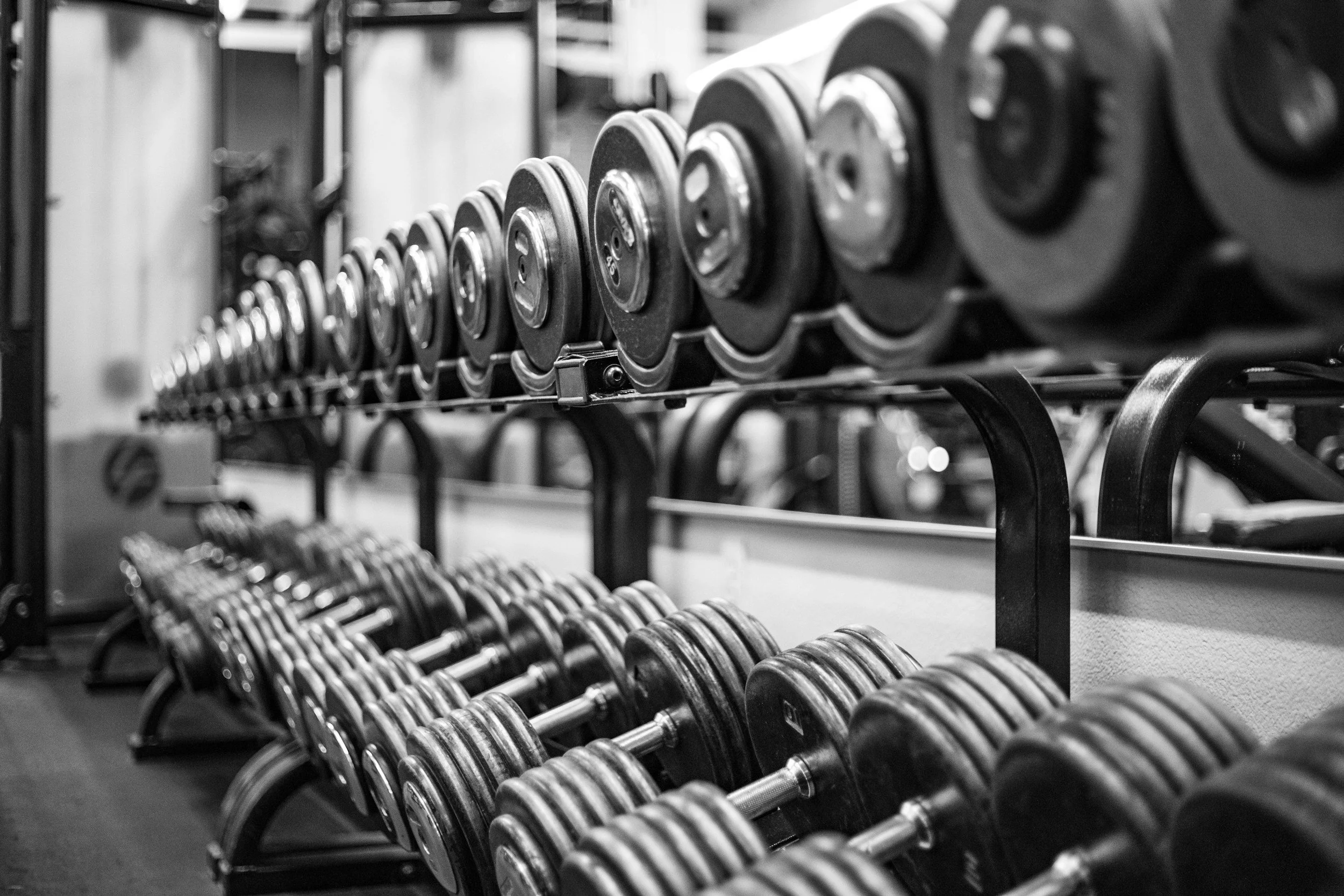
Strength training, also called resistance training, is training that makes your muscles work against an external force……
What Strength Training Is Not (Common Misconceptions)
One of the most common misconceptions is that simply going through the motions counts as strength training. Someone might show up to the gym two or three times a week, work through a familiar routine, and use the same weights they were using six months ago. That is exercise, but it is not strength training in the way that actually builds strength, because nothing is being asked of the body that it cannot already do.
According to PubMed, the American College of Sports Medicine’s position on resistance training makes this explicit: progressive overload (aka linear progression) is necessary to keep stimulating adaptation. (Ratamess et al., 2009).
This plays out in real training data too. In a supervised resistance and balance program for older adults, strength gains were largest specifically in the exercises where continuous progressive overload was actually achieved, not just attempted (Baker et al., 2007). Even with expert supervision, progress tracked directly with whether the load kept increasing.
This is why strength training takes real effort and real consistency. Some sets need to be challenging enough that the last couple of repetitions feel hard, not effortless, and that challenge has to be revisited and increased over weeks and months. Skipping the effort, or skipping the consistency, is why so many people can say they have been lifting for years without ever getting noticeably stronger.
How Strength Training Works (Progressive Overload and Adaptation)
Strength training works because muscle is adaptable tissue. When you ask more of it than it’s used to, the body responds by getting stronger. A few systems contribute to this: the nervous system gets more efficient at recruiting muscle fibers, the fibers themselves gradually thicken, and the tendons and connective tissue that transmit force become more resilient.
This process is called adaptation, and it’s driven by the progressive overload we touched on earlier. It’s also worth knowing that adaptation doesn’t happen during the workout itself, it happens afterward, during recovery, as the body rebuilds tissue slightly more capable than before. That’s part of why rest between sessions matters as much as the training does. Keep gradually increasing the demand, allow adequate recovery, and the body keeps adapting. Stop increasing the challenge, and the adaptation stops too.
It’s useful to think of strength as existing on a spectrum, with an untrained individual on one end and that same person’s absolute maximum strength potential on the other. Where that ceiling actually sits is different for everyone, shaped by things like genetics, training history, and body structure. Very few people ever reach the far end of their own spectrum. What a well-designed training program does is move you steadily toward it, not guarantee you’ll arrive.
Types of Strength Training (Bodyweight, Free Weights, Machines, Bands)
Strength training can be done with several different tools, and each one is capable of driving the same movement patterns and the same progressive overload that make training effective. What changes from one to the next is how you increase the challenge over time, and how accessible that tool is to begin with.
Bodyweight training uses your own body as the resistance, through movements like push-ups, squats, and pull-ups. The ability to overload can be relatively short lived without introducing additional implements, such as weight vests. Having said that, you can increase difficulty by changing leverage, rather than adding external weight, for example progressing from a kneeling push-up to a standard one to a decline push-up. It requires no equipment and is one of the most accessible starting points, though the amount of load you can add eventually has a ceiling.
Free weights include barbells and dumbbells, and of the two, the barbell is what I consider the true gold standard for building strength. It lets you load the fundamental movement patterns, squat, hinge, push, pull directly, and increase that load in small, precise increments over years of training. A barbell can also simply sit on the floor or rest in a rack between sets, which makes it far easier to load, unload, and control safely than a pair of heavy dumbbells. Dumbbells are a close second: they train the same movement patterns and allow the same kind of progressive loading, but eventually most people reach a point where they can no longer safely lift, control, or rack two heavy dumbbells on their own, which limits how far that loading can go. Free weights in general demand more stabilization and coordination than other tools, and that carries over well to everyday life, but they also require some baseline mobility and coordination, and often benefit from coaching to use safely, so they aren’t always the right place for everyone to start.
Kettlebells are also a form of free weight, but their offset handle and shifted center of mass make them especially well suited to swinging, ballistic movements and single-arm work that a barbell or dumbbell doesn’t replicate as naturally. They, along with dumbbells and dedicated implements like trap bars, sandbags, and specific farmers carry implements, are what typically get used for the carry pattern, farmer’s carries, suitcase carries, and rack carries among them. Overload for carries is simple: carry more weight, carry it farther, or carry it longer.
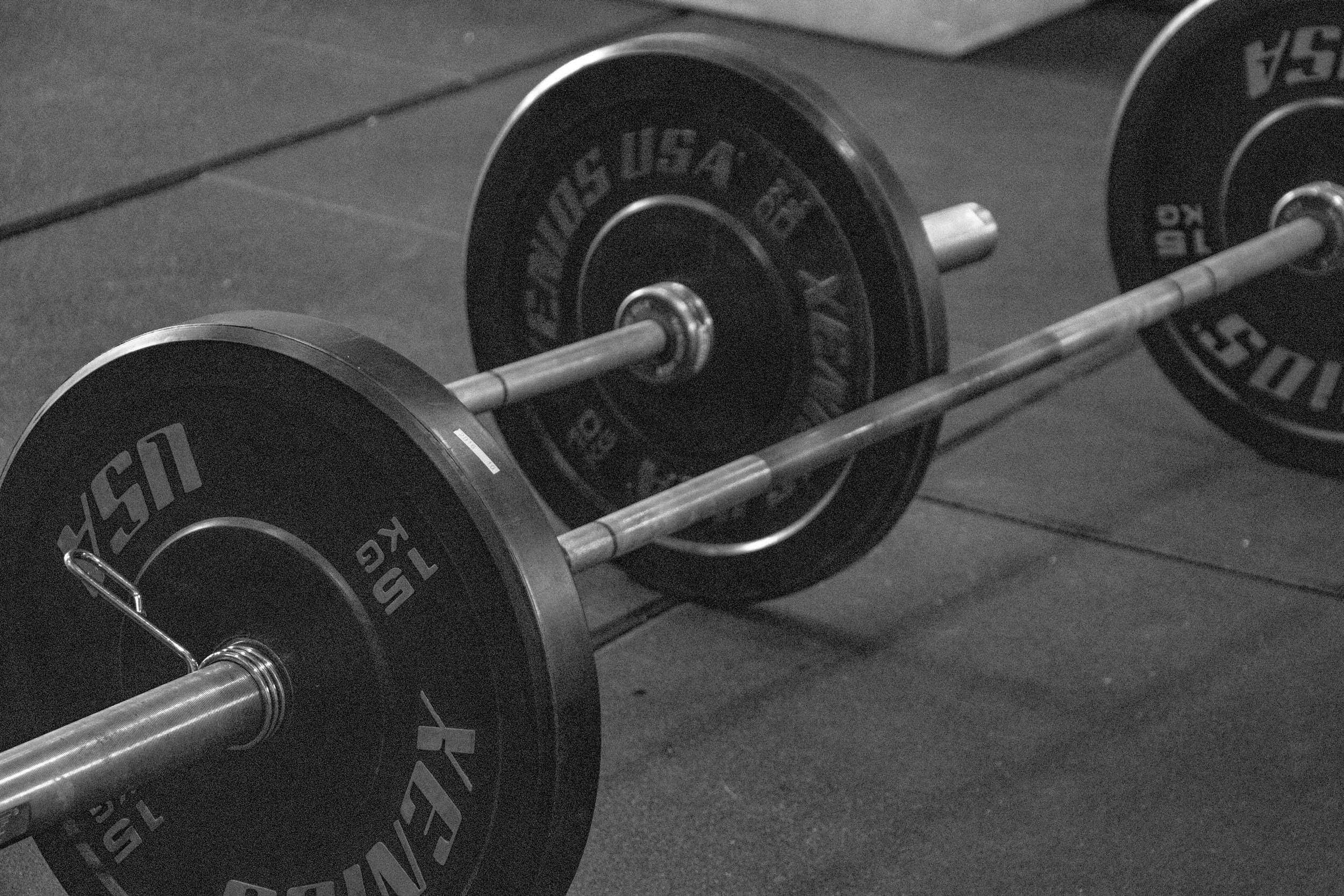
The barbell is what I consider the true gold standard for building strength. It lets you load the fundamental movement patterns, squat, hinge, push, pull…..
Machines guide the body through a fixed path of motion and support the load, which reduces the coordination and stabilization demands of free weights. That makes them a practical option for beginners, people returning from injury, and for anyone whose mobility or physical ability makes free weight movements difficult or unsafe. This fixed path however can lead to injury if the individual is forced to move through a suboptimal range of motion imposed by the machine. Proper machine setup based on the individual’s body is key. Overload is straightforward to manage since most machines allow small, controlled increases in resistance.
Resistance bands and cables provide variable resistance that changes throughout a movement. Overload is achieved by moving to a heavier band, adjusting body position to increase tension, or increasing repetitions. They’re portable, adjustable, and easy on the joints, which makes them useful for home training, travel, rehabilitation, and for people with physical disabilities or limitations that make barbells or heavy free weights impractical.
None of these tools is required to get stronger, and none of them is off-limits to anyone. The right starting point depends on your current ability, access to equipment, and any physical limitations you’re working with. What matters most is consistently applying progressive overload within whichever modality fits your circumstances.
Benefits of Strength Training
Strength training gets marketed heavily around aesthetics, but for the average adult, and especially for older adults, the more meaningful benefits are functional and metabolic. These benefits don’t require chasing a particular look. They show up as more energy, easier everyday movement, and measurable improvements in the systems that keep you healthy over the long term.
One of the most underappreciated benefits is metabolic. Skeletal muscle is the largest site in the body for glucose disposal, meaning it’s where most of the sugar from the food you eat actually gets used. Building and maintaining muscle through strength training improves insulin sensitivity, helping your body manage blood sugar more efficiently. According to PubMed, this relationship runs in both directions: low muscle mass and reduced muscle quality are linked to impaired blood sugar regulation, while building muscle through strength training helps reverse that pattern and improve insulin sensitivity (Mesinovic et al., 2019). More muscle also modestly raises resting metabolic rate, since muscle tissue is more metabolically active at rest than fat tissue. These changes support long-term metabolic health independent of what the scale says.
This is a good place to be direct about something important: strength training should always go hand in hand with a healthy diet, not replace one. On its own, strength training is not an effective weight loss tool, or more specifically fat loss tool. A typical training session burns a relatively modest number of calories, and no amount of lifting can outpace a diet that consistently takes in more energy than the body needs. What strength training does well during a weight loss effort is protect the muscle that a calorie deficit would otherwise put at risk, and improve the metabolic environment your body is working with. Diet drives weight loss. Strength training protects and improves what’s underneath it.
Older adults have the most to gain of anyone. Starting around age 30, adults lose muscle mass at a rate that accelerates with each decade, a process called sarcopenia, and that loss is directly tied to declining strength, balance, and independence later in life. Strength training is one of the few interventions that directly counteracts it. According to PubMed, the National Strength and Conditioning Association’s position statement on resistance training for older adults backs this up, concluding that countering muscle disuse through resistance training is one of the most effective tools available for combating age-related declines in muscle mass, strength, and physical function (Fragala et al., 2019). It also stimulates bone remodeling, which helps preserve bone density and reduce fracture risk. In one randomized controlled trial, postmenopausal women with low bone density who did high-intensity resistance and impact training twice a week for eight months increased bone density at the spine by nearly 3 percent, compared to a decline of over 1 percent in a lower-intensity comparison group, with no serious injuries reported (Watson et al., 2017). And because it improves balance, coordination, and the strength needed for everyday movements, getting out of a chair, climbing stairs, carrying groceries, it’s a key part of the exercise programs that most effectively reduce falls. A major review of over 100 trials found that programs combining balance, functional, and resistance training cut the rate of falls by about a third, and exercise programs overall reduced fall rates by roughly a quarter, making this one of the most effective ways to protect against a leading cause of injury and lost independence in older adults (Sherrington et al., 2019).
None of this requires lifting heavy or training like an athlete. For most adults, the greatest returns come simply from training consistently, applying progressive overload appropriate to their ability, and pairing it with a diet that supports their goals. The benefits compound with age, which is exactly why strength training becomes more important over time, not less.

Starting around age 30, adults lose muscle mass at a rate that accelerates with each decade, a process called sarcopenia, and that loss is directly tied to declining strength, balance, and independence later in life. Strength training is one of the few interventions that directly counteracts it.
Core Principles and Getting Started Safely (Frequency, Progression, Recovery)
A few core principles separate an effective strength training program from one that just goes through the motions. The first is frequency: most adults benefit from training each major movement pattern at least twice a week, since that provides enough stimulus to drive adaptation without requiring daily sessions. How that frequency gets structured, split by day, full body, upper and lower, is a programming decision best made around your schedule, recovery capacity, and goals. The second is progression, which is really just progressive overload applied consistently over time. Without it, the training stimulus becomes insufficient to drive change. The third is recovery. Adaptation happens between sessions, not during them, so muscles need time to rebuild before being challenged again. Sleep, nutrition, and adequate rest time between sessions targeting the same movement patterns all play a role. Training harder without recovering adequately doesn’t accelerate progress, it just accumulates fatigue.
If you’re just getting started, the safest approach is to prioritize technique before load. Most of the strength related movements are skills that require mastery through repetition. Learning to move well through the fundamental patterns, squat, hinge, push, pull, carry, matters more early on than how much weight is on the bar. Start with a level of resistance you can control through a full range of motion, and let the weight increase gradually as your technique and confidence improve. If you have any existing injuries, chronic conditions, or physical limitations, it’s worth talking to a doctor or a qualified coach before starting, so your program can be built around what your body can safely handle.
Take the Next Step
Understanding the fundamentals of strength training is a great first step, but applying them safely and effectively, in a way that fits your body, your goals, and your schedule, is where most people benefit from personalized guidance. Whether you’re looking for one-on-one personal training to learn proper technique and build a program from the ground up, or health coaching that ties your training together with your nutrition and daily habits, I work with clients both in person and virtually to meet you wherever you’re starting from.
If you’d like help putting these principles into practice, I’d love to talk. Reach out to schedule your free discovery calland let’s build a plan that works for you.